

The Electric Vehicle Maintenance Schedule: What Chevy EV Owners Need to Know
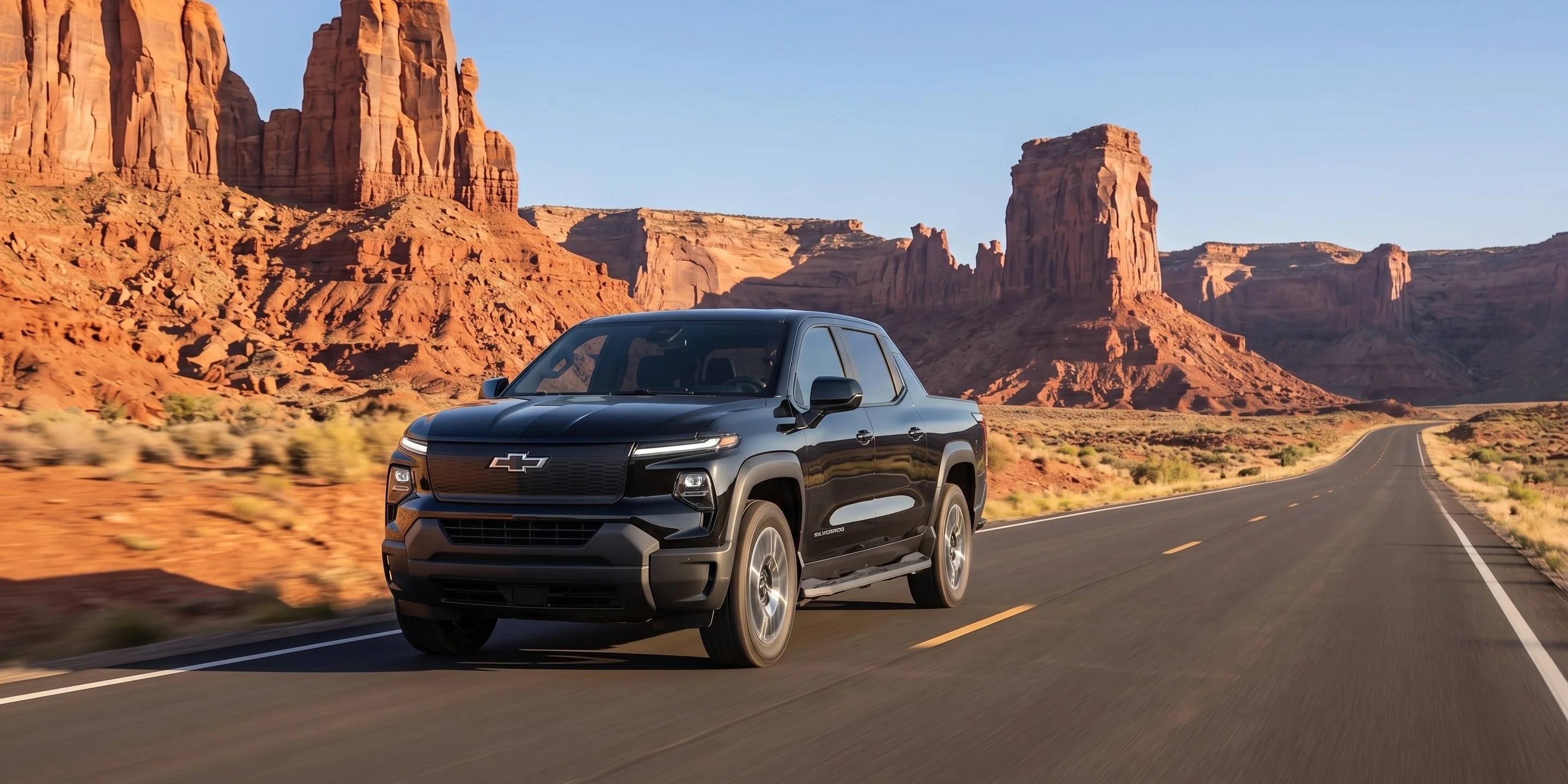
Electric vehicle maintenance centers on preventative care rather than engine repair. A Chevrolet EV like the 2026 Equinox EV skips the frequent fluid changes a gas car needs, following a simpler schedule built around wear-and-tear components — with primary inspections roughly every 7,500 miles.
The most frequent task on the calendar is tire rotation, which our team performs around every 7,500 miles. Because EVs deliver instant torque and carry the added weight of a battery pack, tires can wear faster if they aren’t rotated on schedule. That same visit is when technicians inspect the battery cooling system and check the cabin air filter. For drivers in San Bernardino and the surrounding Inland Empire, staying on top of these rotations is one of the simplest ways to protect your tires and your range.
Beyond routine rotations, longer-interval milestones address the cabin environment and safety systems. Chevrolet’s scheduled replacement for the passenger compartment (cabin) air filter is every 22,500 miles or 24 months, though you may want it checked sooner if you drive in heavy traffic or dusty conditions. If you have questions about your specific model, you can reach our service team at 951-643-4590 to talk through your driving habits. When you’re ready for your first inspection, our service center is equipped with the diagnostics required for high-voltage systems.
Why Electric Vehicles Don’t Need Engine Oil Changes
An electric motor removes the need for the complex lubrication systems found in gasoline engines. In a combustion engine, oil reduces friction between hundreds of fast-moving metal parts — pistons, valves, crankshafts. An electric motor has only around 20 moving parts compared with the 2,000-plus in a typical gas engine, so the high-heat, high-friction environment that breaks down oil simply doesn’t exist. With no engine to lubricate and a single-speed drivetrain in place of a multi-gear gearbox, several recurring gas-car services disappear entirely.
The table below shows which routine gas-engine services an EV owner no longer schedules. Instead of tracking an oil-life monitor, owners focus on over-the-air software updates that keep the battery management system and overall performance optimized.
| Maintenance Item | Gas Vehicle | Chevrolet EV |
|---|---|---|
| Engine oil & filter changes | Every 5,000–10,000 miles | Not required |
| Transmission fluid flushes | Periodic | Not required (single-speed drivetrain) |
| Clutch replacement | As needed | Not applicable |
| Spark plugs & timing belts | Replaced with age/mileage | Not applicable |
| Oil pumps, oil pans, oil-life monitoring | Present (potential failure points) | None |
The 30,000-Mile EV Service Milestone
While the 7,500-mile visits are quick, the 30,000-mile mark is a more thorough checkpoint focused on the systems that protect the high-voltage battery. It’s the point where several longer-interval items come due together. Brake fluid is one to watch in particular, since it’s hygroscopic — it absorbs water over time, which can corrode the lines if it isn’t tested and replaced when needed.
The table below shows how these tasks line up across the schedule. Exact timing varies by model and driving conditions — confirm the schedule for your specific vehicle in your owner’s manual or with our service team. For a model-specific breakdown, our team also maintains a detailed Chevrolet Equinox maintenance schedule you can reference between visits.
| Service Task | Interval | What Happens |
|---|---|---|
| Tire rotation & multi-point inspection | Every 7,500 miles | Rotate tires, inspect brakes and underbody, confirm software is current |
| Cabin (passenger compartment) air filter | Every 22,500 miles or 24 months | Replace filter; check sooner in heavy traffic or dusty conditions |
| Brake fluid | About every 2 years (tested by ~30,000 miles) | Test for moisture and replace if out of spec |
| Battery thermal & health check | Around 30,000 miles | Inspect coolant, run battery health assessment, check charge port |
| Suspension & steering inspection | Around 30,000 miles | Check bushings, ball joints, and alignment for battery-weight wear |
EV vs. Gas Maintenance Costs: The Real-World Math
Over time, an EV tends to cost noticeably less to maintain than a comparable gas vehicle. Industry estimates generally put EV maintenance well below that of a comparable gas vehicle annually, though your actual savings depend on the vehicle, how you drive, and local labor rates. The savings come from a handful of specific cost drivers, summarized below.
| Cost Driver | Gas Vehicle | Chevrolet EV |
|---|---|---|
| Oil, filters & fluids | Recurring expense | Largely eliminated |
| Spark plugs & exhaust repairs | Periodic expense | Not applicable |
| Brake pads & rotors | Wear at a typical rate | Reduced wear from regenerative braking |
| “Fueling” | Gasoline at the pump | Home charging, lower at off-peak rates |
| Upfront technology cost | Lower | Higher, offset over time by lower upkeep |
The brake savings are worth understanding: regenerative braking slows the vehicle by recapturing energy, so the mechanical pads and rotors do far less work than they would on a gas vehicle. Paired with predictable, lower-frequency service, that makes an EV’s total cost of ownership easier to budget over the life of the vehicle.
EV Battery Lifespan and Long-Term Capacity
The lithium-ion packs in modern Chevrolet EVs are engineered to hold strong performance for a decade or more under typical driving. Many in the industry expect today’s EV batteries to last well over a decade in moderate climates before meaningful degradation, though real-world battery life varies with climate, charging habits, and use. Chevrolet backs that longevity with two key layers of coverage:
Preserving capacity comes down to a few simple habits our service team shares with new owners. One of the most effective is the “80 percent rule” — charging to about 80 percent for daily use rather than 100 percent, since routinely topping all the way off can accelerate chemical wear in the cells. Likewise, while DC fast charging is great for road trips, leaning on Level 2 home charging for daily needs generates less heat and is gentler on the battery.
Climate matters too. Extreme heat is generally harder on a battery than cold, though Chevrolet’s liquid-cooling system helps offset it. Parking in shade or a garage during peak summer helps the thermal-management system work efficiently. Keep up with over-the-air updates, and you’ll help protect both range and resale value.
| Coverage | Term | What It Covers |
|---|---|---|
| Bumper-to-bumper limited warranty | 3 years / 36,000 miles | Most vehicle components against defects |
| EV propulsion battery warranty | 8 years / 100,000 miles | High-voltage battery and certain electric propulsion components |
Confirm the exact terms for your vehicle in the warranty booklet tied to your VIN.
This information is provided for general educational purposes only and does not constitute legal advice. Warranty coverage depends on the specific terms of your vehicle’s warranty agreement. Consult your owner’s manual or a qualified legal professional for guidance on your individual situation.
Quick Answers Before You Visit
Does regenerative braking require special maintenance?
Regenerative braking reduces physical wear on the pads, but it can let a little surface rust build on the rotors since they aren’t “scrubbed” as often. Our technicians inspect and clean the calipers and rotors during routine service so the mechanical brakes stay ready for hard stops.
How often should I worry about battery coolant?
The battery cooling system is a closed loop, but levels should be checked during your routine multi-point inspections. A full flush typically isn’t needed for several years, and the exact interval varies by model — our team can confirm the requirement for your specific VIN.
Is it safe to do my own EV maintenance?
Owners can handle the basics — wiper blades, washer fluid, tire pressure. But any work involving the orange high-voltage cables or the battery casing must be left to certified technicians to avoid the risk of serious electrical shock and to protect your warranty.
Why do EVs need more frequent tire rotations?
The heavy battery pack and instant torque place more stress on the tread than a gas powertrain does. Rotating around every 7,500 miles is the best way to prevent uneven wear and get full life from your tires.
What if I miss a software update?
Over-the-air updates often include improvements to the battery management system and charging efficiency. If your vehicle isn’t set to update automatically, our service team can trigger pending updates during a scheduled visit.
Professional Care for Your Chevrolet EV
Maintaining an EV trades messy oil changes for precise diagnostics and preventative system checks. Whether you drive a 2026 Equinox EV or another model in Chevrolet’s electric lineup, our service center is equipped for the technical demands of EV care, with a focus on protecting your range and your battery investment.
Staying current with your routine inspections is the most effective way to keep your EV running as efficiently as the day you brought it home. If you’re approaching a service milestone or have questions about home charging, our team is ready to help. You’ll find us at 8200 Auto Center Drive, Riverside, CA 92504.
The information in this article is provided for general informational purposes only and does not constitute financial, tax, or legal advice. Vehicle pricing, financing and lease terms, tax treatment, fees, and incentives vary by lender, credit profile, location, and individual circumstances, and are subject to change. Consult a qualified financial, tax, or legal professional and confirm current terms with the dealership before making a purchase or lease decision.
0 comment(s) so far on The Electric Vehicle Maintenance Schedule: What Chevy EV Owners Need to Know