
2026 Chevrolet Oil Change & Maintenance FAQ
Keeping up with routine maintenance is one of the best ways to protect your Chevrolet’s performance, safety, and resale value. Whether you drive a 2026 Silverado through Riverside or an Equinox EV around Corona, understanding when and why to service your vehicle helps you avoid costly repairs and stay ahead of wear. Below, the Riverside Chevrolet service team answers the most common maintenance questions from drivers across Riverside, San Bernardino, Fontana, Ontario, Corona, and Eastvale.
How Often Should I Change the Oil in My 2026 Chevrolet?
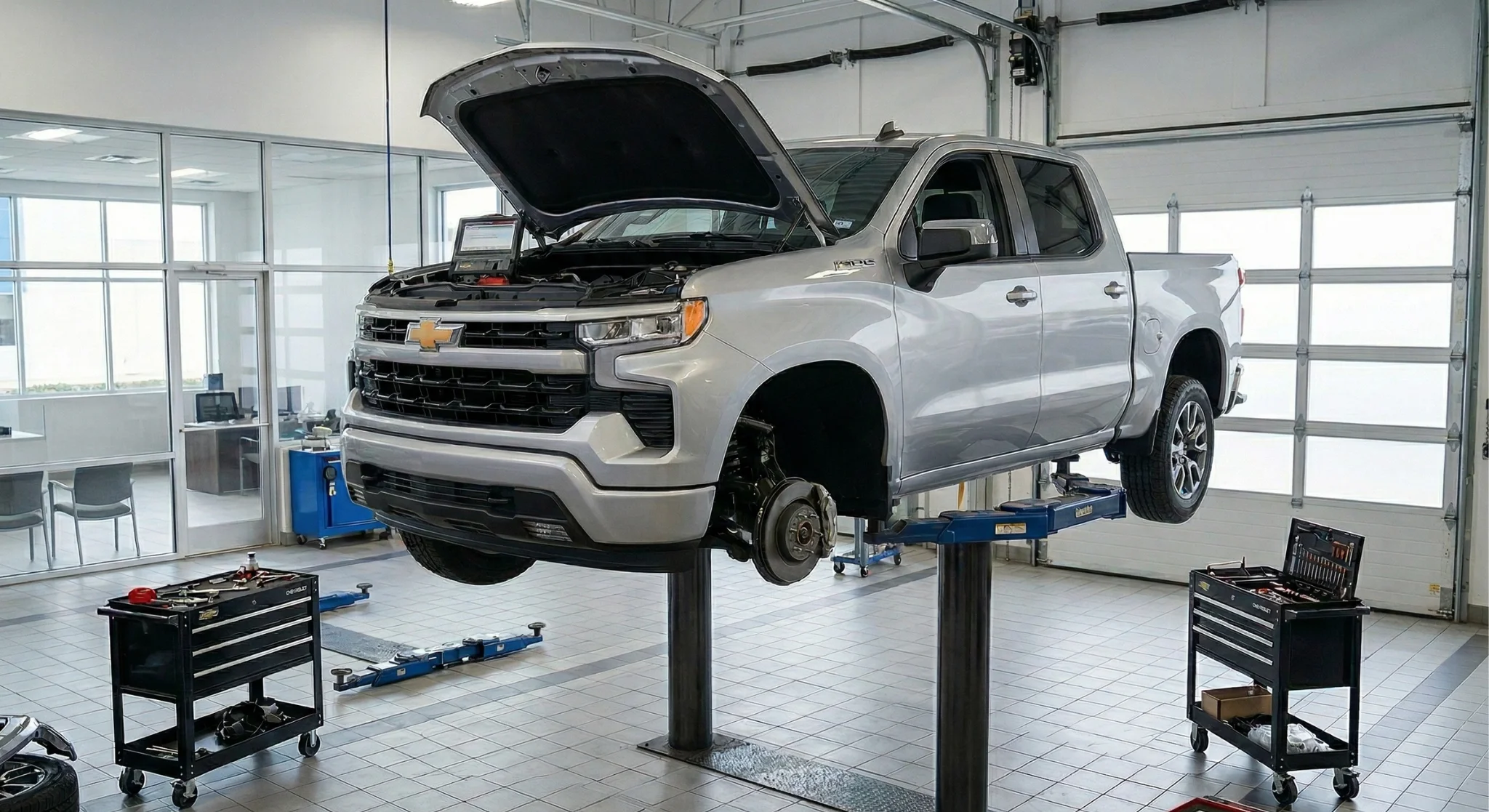
The old rule of changing oil every 3,000 miles has shifted significantly with modern engines and improved oil formulations. Most 2026 Chevrolet models use full synthetic oil and are equipped with an Oil Life Monitoring System (OLMS) that tracks driving conditions and alerts you when service is due. Under normal driving conditions, the OLMS typically triggers an oil change between 7,500 and 10,000 miles.
However, driving habits and environment influence the ideal schedule. Frequent stop-and-go traffic — common in parts of Riverside and San Bernardino — increases engine stress and may shorten intervals. Highway commutes along I-15 or SR-91 are less taxing and may allow for longer periods between changes. Even if you haven’t reached the mileage threshold, it’s generally recommended to change the oil at least every six months to prevent degradation, especially if your vehicle is driven infrequently or mainly for short trips.
Your Chevrolet’s Owner’s Manual provides model-specific guidance, and Riverside Chevrolet’s certified technicians can recommend a schedule tailored to your driving patterns and local conditions.
How Do the Maintenance Needs of Electric and Hybrid Chevrolet Vehicles Differ from Gasoline Models?
Electric and hybrid vehicles have distinct maintenance requirements because their powertrains operate differently. For electric vehicles like the Chevrolet Equinox EV, the absence of an internal combustion engine eliminates the need for oil changes, spark plug replacements, and many routine engine-related services. Maintenance focuses instead on battery health, electrical systems, and software updates.
Battery management is a critical aspect for both EVs and hybrids. Manufacturers recommend periodic inspections of the battery’s state of charge and cooling systems to ensure optimal performance and longevity. Maintaining proper thermal regulation is essential in warmer climates like Riverside’s Inland Empire region to prevent premature degradation. Chevrolet backs EV battery packs with an 8-year/100,000-mile limited warranty for added peace of mind.
Regenerative braking technology — which recovers kinetic energy to recharge the battery — also means brake pads in electric and hybrid vehicles last significantly longer than those in gasoline-powered cars. Brake inspections are less frequent but still necessary to maintain safety standards. EV owners should also monitor specialized cooling circuits for battery and inverter components, and be aware that the added weight of EV battery packs can influence tire wear patterns, making regular tire rotations especially important.
Routine checks like cabin air filter replacement, tire rotations, and windshield wiper replacement remain important for all 2026 vehicles regardless of powertrain type.
What Is the Difference Between Minor and Major Vehicle Service?
Minor service refers to routine maintenance tasks that keep your vehicle running smoothly day to day. These typically include oil and filter changes, tire rotations, fluid level checks, and inspections of brakes, belts, and hoses. For most 2026 Chevrolet models, minor service aligns with the OLMS-recommended oil change intervals — generally every 7,500 to 10,000 miles depending on driving conditions.
Major service is more comprehensive and less frequent but essential for long-term reliability and safety. Major service intervals vary by model, but key milestones for 2026 Chevrolet vehicles include engine air filter replacement around 22,500 miles, brake fluid service around 45,000 miles, and spark plug replacement around 97,500 miles. Cabin air filters should be replaced approximately every 15,000 miles. For drivers who tow frequently or drive in severe conditions, transmission fluid service may be recommended earlier — around 45,000 miles rather than the standard interval. Major service also includes in-depth diagnostic scans to identify issues with the increasingly complex electronic systems in 2026 models — including advanced driver assistance and infotainment technologies.
Staying on top of both minor and major service ensures optimal performance, helps maintain warranty compliance, and protects resale value. Consulting your Owner’s Manual and working with certified technicians at Riverside Chevrolet guarantees that all maintenance uses genuine parts and approved procedures.
How Do Maintenance Costs Compare, and What Should I Know About Warranty Coverage?
Gasoline-powered 2026 Chevrolet models require more frequent routine maintenance — oil changes, spark plug replacements, brake inspections, and periodic transmission fluid service. These costs can add up, especially for drivers in stop-and-go conditions common around Ontario and Fontana. Electric vehicles generally have lower routine maintenance costs since they eliminate oil changes, spark plugs, and many engine-related services. Regenerative braking also extends brake pad life. Hybrid vehicles fall somewhere in between, combining some gasoline engine maintenance with reduced frequency due to electric motor assistance.
Warranty coverage plays an important role in managing costs. Most 2026 Chevrolet vehicles include comprehensive warranties covering powertrain components during the initial years of ownership. For electric and hybrid models, Chevrolet’s EV battery warranty extends to 8 years or 100,000 miles, whichever comes first. Staying current with recommended maintenance at an authorized service center is essential to maintain warranty validity.
One important note: under federal law — specifically the Magnuson-Moss Warranty Act — your warranty cannot be voided simply for using aftermarket parts. However, if an aftermarket component directly causes damage or failure, warranty coverage for that specific repair may not apply. Using genuine Chevrolet parts and authorized service ensures full warranty compliance and reduces the risk of complications.
What Practical Maintenance Tips Apply to Driving in the Riverside Area?
The warm Inland Empire climate and varied driving conditions across Riverside and its surrounding communities create specific maintenance considerations. Regularly checking coolant levels and ensuring the radiator and hoses are in good condition helps prevent overheating during hot summer months — temperatures in the region frequently exceed 100°F.
Urban driving with frequent stopping can accelerate brake pad wear, so more frequent brake inspections are advisable for drivers who commute through congested areas. Tire health is equally important — Riverside’s heat can accelerate tire wear and cause pressure fluctuations. Maintaining correct tire pressure and rotating tires per manufacturer guidelines preserves tread life and improves fuel efficiency.
Intense heat also causes fluids to degrade faster, so adhering to recommended oil change intervals and monitoring transmission and brake fluid levels helps keep your Chevrolet running reliably. Additionally, regular undercarriage washes protect against dust and road debris common in the region.
Staying proactive with scheduled maintenance and addressing minor issues promptly prevents breakdowns and extends your vehicle’s lifespan.
Disclaimer: The maintenance schedules and service intervals referenced in this article are general guidelines and may vary by model, trim, driving conditions, and oil type. Always consult your Chevrolet Owner’s Manual for model-specific recommendations. Warranty information is provided for general reference only and does not constitute a guarantee of coverage — customers should review their specific warranty terms or speak with a Riverside Chevrolet service advisor for details. This content is for informational purposes only and does not substitute for professional diagnostic or service advice from a certified technician.
Schedule Service at Riverside Chevrolet
Riverside Chevrolet’s factory-trained technicians are equipped to handle the unique maintenance demands of both gasoline and electric Chevrolet models at our service center located at 8200 Auto Center Drive, Riverside, CA 92504. To schedule your next service appointment, call our service department at (951) 643-4590 or book online.