

2026 Chevy Equinox vs. 2026 Hyundai Tucson: Which Compact SUV Wins for Inland Empire Families?
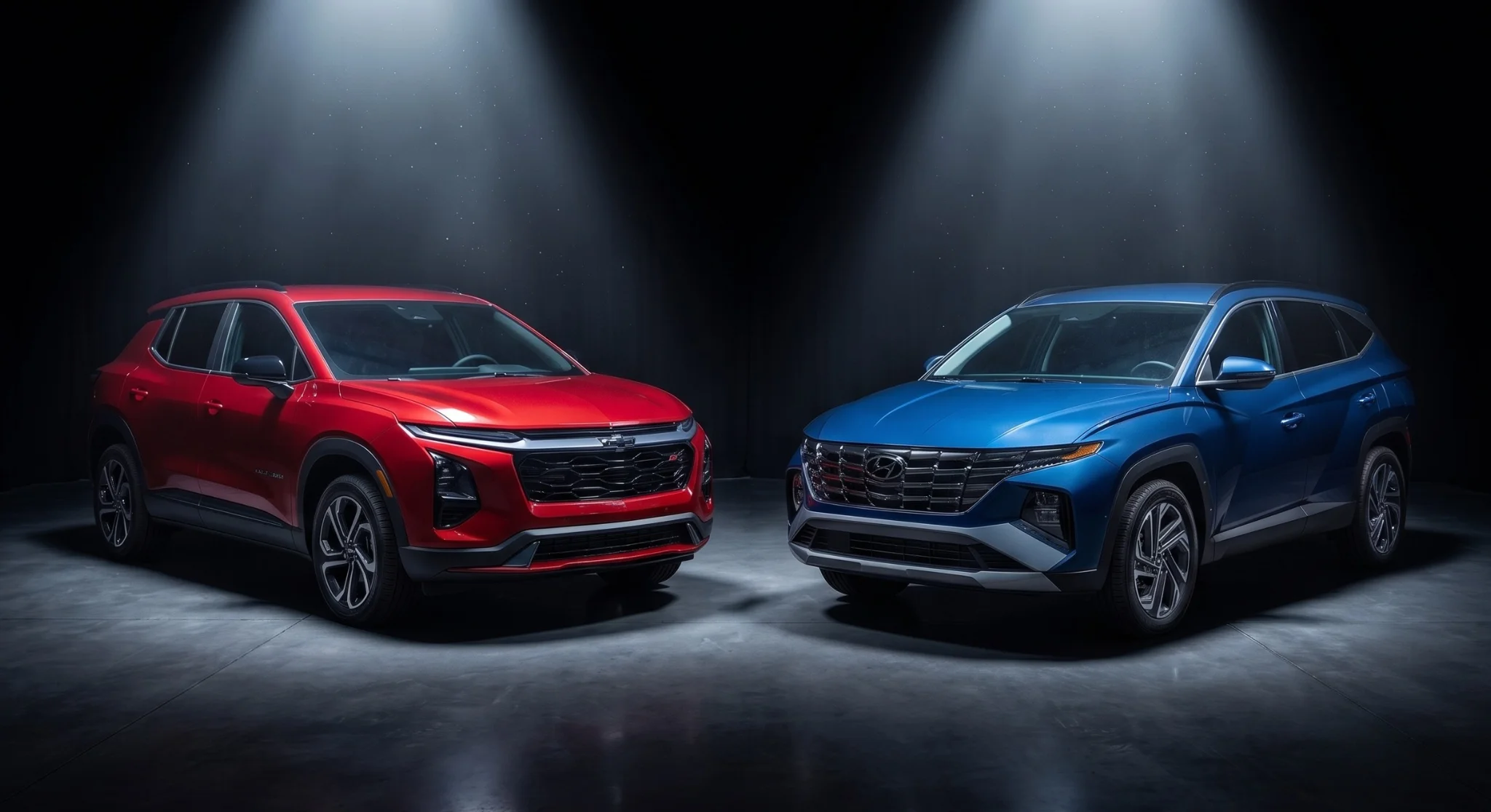
Choosing the right compact SUV means looking past the brochure to see how each vehicle handles real daily duty — school drop-offs, grocery runs, and weekend gear hauls. This head-to-head compares the 2026 Chevrolet Equinox and the 2026 Hyundai Tucson on price, space, powertrains, technology, safety, and warranty, so drivers across Riverside, Corona, Eastvale, Ontario, Fontana, and San Bernardino can decide which one belongs in their driveway.
Both are strong choices. The Equinox leads on starting price, value-packed standard equipment, and simple ownership. The Tucson counters with an available hybrid, a longer powertrain warranty, and higher towing. Here’s how they actually stack up.
At-a-Glance: 2026 Equinox vs. 2026 Tucson
| Spec | 2026 Chevy Equinox (MSRP*) | 2026 Hyundai Tucson (Gas) (MSRP*) |
|---|---|---|
| Starting MSRP* | ~$30,795 | ~$30,800 |
| EPA-Estimated MPG (combined, FWD) | 27 mpg | 28 mpg gas / up to 38 mpg hybrid |
| Max Towing | 1,500 lbs | 2,750 lbs (with trailer brakes) |
| Hybrid Available? | No (gas only) | Yes (hybrid & plug-in hybrid) |
*Manufacturer’s Suggested Retail Price (MSRP) for new vehicles includes manufacturer and distributor options and delivery, process and handling fees, which may be subject to change at any time. MSRP excludes taxes, title, license and dealer installed options, accessories, fees and charges. MSRP is not the dealer advertised price. Dealer price will vary. The dealer sets the final price.
Maximum towing and payload capacity figures are based on properly equipped vehicles and vary by configuration. Do not exceed any weight rating. See your owner’s manual and the vehicle’s door-jamb label for specific capacities.
Quick takeaway: On a like-for-like basis with destination folded in, the two start within a few dollars of each other — roughly $30,800 apiece. The Equinox makes its value case through standard equipment (heated front seats and a heated steering wheel come standard on the entry LT), while the Tucson answers with more highway MPG and notably higher towing. Neither offers a hybrid Equinox — the Chevy is gas-only, while Hyundai adds hybrid and plug-in hybrid Tucson options.
Pricing & Trims: Where Your Dollar Goes Furthest
The 2026 Equinox keeps its lineup simple with three well-equipped gas trims, each built around a clear personality: comfort (LT), sport (RS), and adventure (ACTIV).
2026 Chevrolet Equinox Trims
| Trim | Starting MSRP* |
|---|---|
| LT | ~$30,795 |
| RS | ~$35,595 |
| ACTIV | ~$35,595 |
AWD is available on all three trims for an additional cost.
2026 Hyundai Tucson Trims (Gas)
| Trim | Starting MSRP* |
|---|---|
| SE | ~$30,800 |
| SEL | ~$32,150 |
| XRT | ~$34,725 |
| SEL Premium | ~$35,150 |
| Limited | ~$41,025 |
Figures reflect FWD pricing; AWD is a ~$1,500 option on gas trims. The Tucson Hybrid lineup (Blue SE, SEL, SEL Convenience, Limited) starts around a MSRP of $34,050 with standard AWD.
*Manufacturer’s Suggested Retail Price (MSRP) for new vehicles includes manufacturer and distributor options and delivery, process and handling fees, which may be subject to change at any time. MSRP excludes taxes, title, license and dealer installed options, accessories, fees and charges. MSRP is not the dealer advertised price. Dealer price will vary. The dealer sets the final price.
Where the Equinox builds its value case is standard equipment for the money. The Equinox LT includes heated front seats and a heated steering wheel as standard — features many rivals reserve for pricier trims — alongside an 11.3-inch touchscreen, an 11-inch digital driver cluster, Google built-in, and wireless Apple CarPlay and Android Auto. With the two SUVs starting at nearly the same price, the question becomes how much equipment each dollar buys, and the LT packs a lot of standard content into its entry point. You can see the full breakdown on our 2026 Equinox trims and features page.
Cargo & Passenger Space
Both SUVs seat five and handle family logistics well, but they package cargo differently.
| Cargo Volume | 2026 Equinox | 2026 Tucson |
|---|---|---|
| Behind rear seats | 29.8 cu ft | 38.7 cu ft |
| Max (seats folded) | 63.5 cu ft | 74.8 cu ft |
Honesty matters on a comparison like this: the Tucson holds more cargo in both configurations. What the Equinox offers in return is a wide, square opening, a flat load floor, and smart storage touches like a hidden under-floor compartment — practical details that make loading strollers, coolers, and bulky bins straightforward. If maximum raw cargo volume is your single deciding factor, the Tucson has the edge. If you value an easy-to-load shape and everyday usability, the Equinox holds its own.
Both models’ figures above use the SAE measurement standard for an apples-to-apples comparison. You may see larger numbers for the Tucson elsewhere (41.2 / 80.3 cu ft), which reflect a different (VDA) measurement method.
Performance & Fuel Efficiency
The Equinox is tuned for smooth, relaxed daily driving rather than outright speed. Its turbocharged engine delivers easy low-end pull for merging and around-town errands, and the ride stays composed and quiet on the highway — a comfortable, low-drama commuter.
The Tucson’s gas engine covers the same everyday duties, but its real efficiency story is the hybrid. That’s a genuine advantage the Equinox can’t match — Chevy does not offer a hybrid Equinox (the electrified option is the separate Equinox EV). The table below lays out how the three powertrains compare.
| Powertrain | 2026 Equinox | 2026 Tucson (Gas) | 2026 Tucson Hybrid |
|---|---|---|---|
| Engine | 1.5L turbo 4-cyl | 2.5L 4-cyl | 1.6L turbo + electric motor |
| Horsepower | 175 hp | 187 hp | 231 hp combined |
| Torque | 184 lb-ft (FWD) / 203 lb-ft (AWD) | 178 lb-ft | 271 lb-ft combined |
| Transmission | CVT (FWD) / 8-speed auto (AWD) | 8-speed automatic | 6-speed automatic |
| Drivetrain | FWD standard / AWD available | FWD standard / AWD available | Standard HTRAC AWD |
| EPA-Estimated MPG (combined) | 27 (FWD) / 26 (AWD) | 28 (FWD) / 26 (AWD) | 38 (Blue SE) / 36 (other trims) |
EPA-estimated fuel economy figures are for comparison purposes only. Your actual mileage will vary depending on driving conditions, how you drive and maintain your vehicle, battery age/condition, and other factors.
Bottom line on powertrains: For simple, low-maintenance gas ownership at a competitive price, the Equinox makes a strong case. For maximum fuel economy, the Tucson Hybrid is the clear pick.
Technology
Both cabins are modern and screen-forward:
2026 Equinox
11.3-inch central touchscreen with an 11-inch digital driver cluster, Google built-in, and standard wireless Apple CarPlay and Android Auto.
2026 Tucson
12.3-inch touchscreen standard across all trims with wireless Apple CarPlay and Android Auto; a matching 12.3-inch digital cluster arrives on SEL Premium and above, and the Limited adds a 12-inch head-up display.
The Tucson offers slightly larger standard displays and an available panoramic dual-screen layout on upper trims. The Equinox counters with Google built-in and an intuitive, easy-to-learn interface. Both keep front and rear passengers powered with well-placed USB charging.
Safety
Both SUVs come well-equipped with standard driver-assistance technology.
2026 Equinox — Chevy Safety Assist (Standard)
Automatic Emergency Braking
Front Pedestrian Braking
Forward Collision Alert
Lane Keep Assist with Lane Departure Warning
IntelliBeam auto high beams
Teen Driver — over 15 standard safety features
Rear cross-traffic braking and a surround-view camera are available on RS and ACTIV.
2026 Tucson — Hyundai SmartSense (Standard)
Forward Collision-Avoidance Assist (pedestrian, cyclist, junction)
Blind-Spot Collision Warning
Rear Cross-Traffic Collision-Avoidance Assist
Lane Keeping Assist and Lane Following Assist
Smart Cruise Control with Stop & Go
The Limited adds a Blind-Spot View Monitor and Surround View Monitor.
Both deliver comprehensive standard safety suites, so on standard driver-assistance content the two are closely matched. Where they differ today is crash-test recognition: the 2026 Tucson has earned the IIHS Top Safety Pick+ award and a 5-star overall NHTSA rating. The 2026 Equinox’s full crash-test ratings had not yet been published by IIHS or NHTSA as of mid-2026, so a direct crash-rating comparison isn’t possible yet — buyers who weigh published safety awards heavily should keep that in mind and check IIHS.org and NHTSA.gov for the latest results before purchase.
Warranty & Ownership
| Coverage | 2026 Equinox | 2026 Tucson |
|---|---|---|
| Basic (bumper-to-bumper) | 3 yr / 36,000 mi | 5 yr / 60,000 mi |
| Powertrain | 5 yr / 60,000 mi | 10 yr / 100,000 mi |
| Roadside / Extras | 5 yr / 60,000 mi roadside + 1 yr free maintenance | 5 yr / unlimited mi roadside assistance |
Hyundai’s warranty is the longer of the two on paper, particularly its 10-year/100,000-mile powertrain coverage — a real Tucson advantage worth weighing. What Chevrolet ownership offers is the convenience of an extensive, established local service network, so routine maintenance and warranty work stay close to home for drivers across Riverside and the Inland Empire.
Warranty coverage depends on the specific terms of your vehicle’s warranty agreement. Coverage details, limitations, and exclusions apply; see the manufacturer’s official warranty terms for complete information. Sources: Chevrolet Warranty and Hyundai Warranty.
Common Buyer Questions
Is the 2026 Chevy Equinox worth choosing over the Hyundai Tucson?
For many shoppers, yes — especially value-focused buyers. With destination folded in, the Equinox and Tucson start at nearly the same price (around $30,800), but the Equinox includes standard heated front seats and a heated steering wheel on the entry LT and offers a straightforward, low-maintenance gas powertrain. If your priorities are a well-equipped cabin for the money and simple ownership, the Equinox is a smart pick.
Which SUV is better on fuel?
If maximum efficiency is the goal, the Tucson Hybrid wins — the Blue SE is EPA-estimated at 38 mpg combined. Among gas models the two are close (Equinox 27 mpg EPA-estimated combined FWD; Tucson gas 28 mpg EPA-estimated combined FWD), but the Equinox has no hybrid option, so the Tucson leads on outright efficiency.
Which holds more cargo?
The Tucson, in both measures — 38.7 cu ft behind the rear seats and 74.8 cu ft folded, versus the Equinox’s 29.8 and 63.5. The Equinox counters with a wide, flat, easy-to-load cargo area and hidden under-floor storage.
Where can I see the 2026 Equinox in person?
Riverside Chevrolet stocks the 2026 Equinox in LT, RS, and ACTIV trims. You can browse the current 2026 Equinox lineup online or contact our sales team to schedule a test drive at our Riverside showroom, convenient to Corona, Eastvale, Ontario, Fontana, and San Bernardino.
The Verdict
The 2026 Hyundai Tucson is a genuinely strong compact SUV — it offers an available hybrid, more cargo room, higher towing, a longer powertrain warranty, and top-tier IIHS and NHTSA safety awards, and those advantages are real. But for shoppers focused on standard content for the money, the 2026 Chevrolet Equinox makes a compelling everyday case: standard heated front seats and a heated steering wheel on the entry LT, modern Google built-in tech, a full standard driver-assistance suite, and simple, low-maintenance gas ownership backed by a convenient local service network — all at a starting price that lands right alongside the Tucson’s.
For Inland Empire families weighing value, comfort, and cost of entry, the Equinox is the practical winner. The best way to decide is behind the wheel. For a closer look at what sets it apart, read our in-depth 2026 Equinox features review, then come see it in person.
Disclaimers
*Manufacturer’s Suggested Retail Price (MSRP) for new vehicles includes manufacturer and distributor options and delivery, process and handling fees, which may be subject to change at any time. MSRP excludes taxes, title, license and dealer installed options, accessories, fees and charges. MSRP is not the dealer advertised price. Dealer price will vary. The dealer sets the final price.
Maximum towing and payload capacity figures are based on properly equipped vehicles and vary by configuration. Do not exceed any weight rating. See your owner’s manual and the vehicle’s door-jamb label for specific capacities.
Both models’ figures above use the SAE measurement standard for an apples-to-apples comparison. You may see larger numbers for the Tucson elsewhere (41.2 / 80.3 cu ft), which reflect a different (VDA) measurement method.
EPA-estimated fuel economy figures are for comparison purposes only. Your actual mileage will vary depending on driving conditions, how you drive and maintain your vehicle, battery age/condition, and other factors.
Warranty coverage depends on the specific terms of your vehicle’s warranty agreement. Coverage details, limitations, and exclusions apply; see the manufacturer’s official warranty terms for complete information. Sources: Chevrolet Warranty and Hyundai Warranty.